Understanding court benches and jurisdiction is essential for anyone dealing with the Indian judicial system. Whether you’re filing a civil suit, criminal case, writ petition, appeal, or Public Interest Litigation (PIL), it is important to know which court has the authority to hear your case and which bench will decide it.
Many people confuse a bench with a court or are unsure about terms like territorial jurisdiction, original jurisdiction, appellate jurisdiction, and constitutional bench. This guide explains these concepts in simple language to help litigants, students, and the general public better understand how courts in India function.
Quick Information
| Topic | Details |
| Guide Type | Court Benches & Jurisdiction |
| Applicable To | Supreme Court, High Courts & District Courts |
| Covers | Bench Types, Jurisdiction & Court Structure |
| Best For | Litigants, Students, Researchers & General Public |
| Last Updated | 2026 |
What Is a Court Bench?
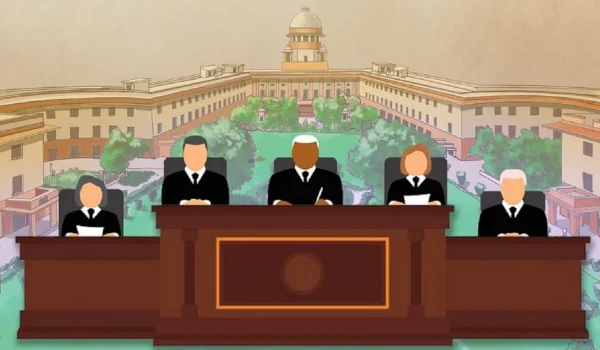
A court bench refers to the judge or group of judges hearing and deciding a particular case. The number of judges assigned depends on the nature, complexity, and legal importance of the matter.
For example:
- A case may be heard by a Single Judge Bench.
- Important appeals may be heard by a Division Bench.
- Constitutional matters may require a Constitution Bench of five or more judges.
A bench does not mean a separate court building—it refers to the judicial composition hearing the case.
What Is Jurisdiction?
Jurisdiction is the legal authority of a court to hear, decide, and pass orders in a case.
Every court has defined powers based on:
- Location
- Type of dispute
- Monetary value
- Subject matter
- Legal provisions
If a court does not have jurisdiction, it generally cannot decide the case.
Types of Court Benches
Single Judge Bench
A Single Judge Bench consists of one judge.
It commonly hears:
- Civil Matters
- Criminal Matters
- Writ Petitions
- Appeals (where permitted)
- Miscellaneous Applications
Many routine matters in High Courts are heard by Single Judge Benches.
Division Bench
A Division Bench consists of two judges.
It generally hears:
- Appeals from Single Judge decisions
- Important legal matters
- Selected writ petitions
- Cases assigned by court rules
Full Bench
A Full Bench usually consists of three or more judges.
It is constituted when important questions of law require consideration or when conflicting legal decisions need clarification.
The exact number of judges may vary depending on the court’s rules.
Constitution Bench
A Constitution Bench consists of at least five judges of the Supreme Court.
It is formed to decide substantial questions relating to the interpretation of the Constitution under Article 145(3) of the Constitution of India.
Constitution Benches hear matters involving significant constitutional issues.
Larger Bench
A Larger Bench is constituted when a court decides that an issue should be considered by more judges than a previous bench, often to resolve conflicting legal opinions or address important legal questions.
Types of Jurisdiction
Indian courts exercise different kinds of jurisdiction depending on the nature of the dispute.
Territorial Jurisdiction
Territorial jurisdiction refers to the geographical area within which a court can hear a case.
For example:
- A property dispute is generally filed in the area where the property is located.
- A civil dispute may be filed where the cause of action arose, subject to the applicable law.
Pecuniary Jurisdiction
Pecuniary jurisdiction depends on the monetary value of the dispute.
Different courts may have different financial limits prescribed under applicable laws or state rules.
Subject Matter Jurisdiction
Subject matter jurisdiction depends on the type of case.
Examples include:
- Civil Cases
- Criminal Cases
- Family Matters
- Commercial Disputes
- Consumer Matters
- Tax Matters
A court can hear only those matters that fall within its legal authority.
Original Jurisdiction
Original jurisdiction allows a court to hear a case directly without requiring it to be decided first by a lower court.
Examples include:
- Certain disputes between the Union and States before the Supreme Court.
- Certain writ petitions before High Courts.
- Other matters specifically provided by law.
Appellate Jurisdiction
Appellate jurisdiction allows a higher court to hear appeals against decisions made by lower courts.
Examples:
- District Court → High Court
- High Court → Supreme Court
Writ Jurisdiction
High Courts (under Article 226) and the Supreme Court (under Article 32) have the power to issue constitutional writs in appropriate cases.
The five writs are:
- Habeas Corpus
- Mandamus
- Certiorari
- Prohibition
- Quo Warranto
Supervisory Jurisdiction
High Courts supervise District and Subordinate Courts functioning within their territorial jurisdiction.
This ensures consistency and proper administration of justice.
Advisory Jurisdiction
Under Article 143, the President of India may seek the advisory opinion of the Supreme Court on certain legal or constitutional questions.
Bench Types at Different Court Levels
| Court | Common Bench Types |
| Supreme Court | Division Bench, Constitution Bench, Larger Bench |
| High Court | Single Judge, Division Bench, Full Bench |
| District Court | Single Judge / District & Sessions Judge (depending on the case and court structure) |
How Is the Appropriate Bench Decided?
The assignment of cases is generally governed by:
- Court Rules
- Roster issued by the Chief Justice of the concerned court
- Nature of the case
- Applicable laws
- Judicial requirements
Litigants cannot ordinarily choose the bench that will hear their case.
High Court Benches
Many High Courts have permanent or circuit benches to improve access to justice in different regions.
Examples include:
| High Court | Bench Locations |
| Allahabad High Court | Lucknow |
| Bombay High Court | Nagpur, Aurangabad, Panaji |
| Karnataka High Court | Dharwad, Kalaburagi |
| Madhya Pradesh High Court | Indore, Gwalior |
| Madras High Court | Madurai |
| Rajasthan High Court | Jaipur |
These benches function under the administrative control of the principal High Court.
Difference Between Bench and Jurisdiction
| Bench | Jurisdiction |
| Refers to the judge or group of judges hearing a case | Refers to the legal authority of a court to hear a case |
| Determines who hears the matter | Determines whether the court can hear the matter |
| Based on court roster | Based on law and legal provisions |
Common Factors That Decide Jurisdiction
Courts generally determine jurisdiction based on:
- Location of the dispute
- Nature of the case
- Monetary value
- Applicable statute
- Court hierarchy
- Constitutional provisions
Why Jurisdiction Matters
Filing a case in the correct court helps:
- Avoid unnecessary delays.
- Prevent return or transfer of the case due to lack of jurisdiction.
- Ensure proper legal proceedings.
- Reduce procedural complications.
If there is uncertainty, obtaining legal advice is advisable.
Frequently Asked Questions
What is a court bench?
A court bench refers to the judge or group of judges hearing and deciding a case.
What is jurisdiction?
Jurisdiction is the legal authority of a court to hear, decide, and pass orders in a case.
What is the difference between original and appellate jurisdiction?
Original jurisdiction allows a court to hear a case directly, while appellate jurisdiction allows a higher court to review decisions made by lower courts.
What is a Constitution Bench?
A Constitution Bench of the Supreme Court consists of at least five judges and hears substantial questions relating to the interpretation of the Constitution.
Can a case be transferred to another court?
Yes. In certain circumstances and subject to applicable laws and court orders, a case may be transferred from one court to another.
Related Court Guides
- Court Guide in India
- Supreme Court of India Guide
- High Courts in India
- District Courts in India
- Court Procedures Guide
- Court Case Status Guide
- Court Terminology Guide
- eCourts Services Guide
- Court Documents Guide
Final Thoughts
Court benches and jurisdiction are fundamental concepts in the Indian judicial system. While a bench determines which judge or judges will hear a case, jurisdiction determines whether a court has the legal authority to hear that case in the first place.
Understanding these concepts can help litigants, students, and legal professionals navigate court proceedings more effectively. Whether you’re filing a case, studying law, or researching India’s judiciary, knowing the different types of benches and jurisdiction provides a strong foundation for understanding how justice is administered across the country’s courts.